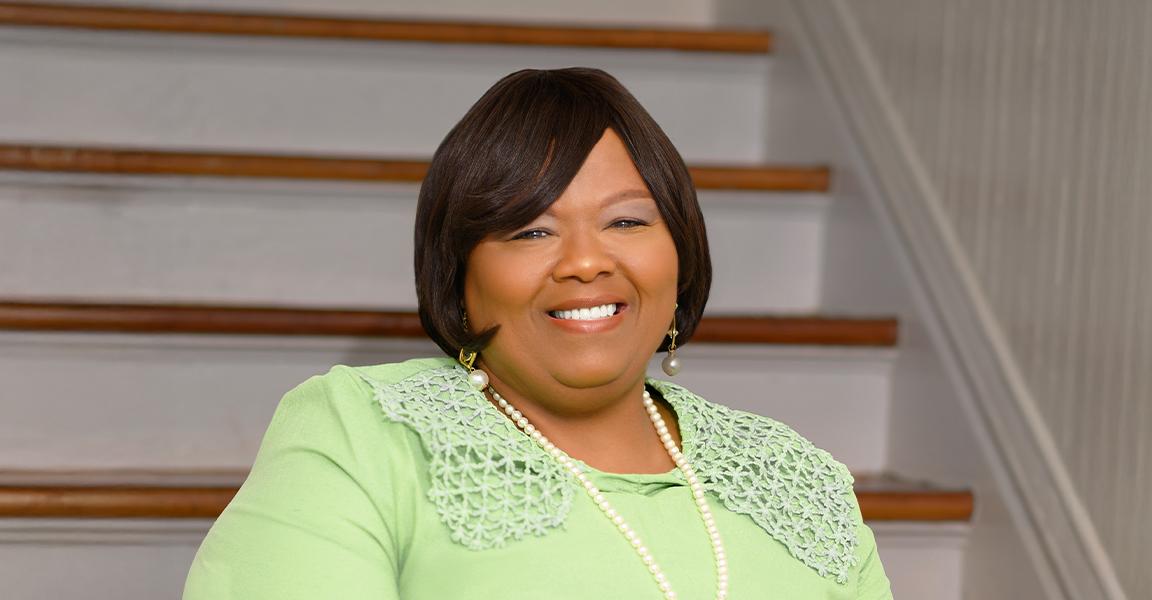
Some people look at hardship and see a reason to give up. Others look at the same circumstances and see a responsibility to lift others up. Pauline Rogers falls squarely in the second camp. The co-founder and Executive Director of the Reaching and Educating for Community Hope (RECH) Foundation in Mississippi has spent the last three and a half decades building something most people would never attempt in the deep Jim Crow South, Mississippi: a lifeline for the incarcerated and formerly incarcerated.
What makes her work even more remarkable is the zero-recidivism track record she's maintained throughout her career. In a field where statistics can feel discouraging, Pauline's organization quietly defies the odds. But numbers alone don't capture who she really is. To understand Pauline Rogers, you have to start with the woman she comes from and the losses she's carried.
A Foundation Built on Faith
When you listen to Pauline talk about her life, one thing becomes clear: her faith isn't something she discusses separately from her work. It's the through-line of everything. When she talks about growing up as the eldest of eleven siblings in Vancleave, Mississippi, her voice carries a tenderness about those early years despite the real struggle her family faced.
"I think it's because of my upbringing, how I was raised," she says. "I was raised in a church and that's what the church did. You help people. And all of my life I always heard that if you need help, always find a church. The people in those places are always there to help." That simple lesson from childhood became the architecture of her entire life's work.
When her father passed away, young Pauline took on a caregiver role for her siblings far earlier than most kids should have to. That responsibility shaped her into someone who sees taking care of others not as a burden but as a calling. Years later, her personal encounter with the criminal legal system would deepen that calling in ways she couldn't have anticipated.
The Real Costs of Incarceration
The system's cruelty became personal for Pauline in ways that no statistic could ever capture. One of her brothers spent time in prison, and the circumstances surrounding his incarceration laid bare the failures of a system that's supposed to protect people, not destroy them. He had been working a good job as a welder for one of the major shipping industries in Mississippi. Then came a car accident, a head-on collision that changed everything. He needed a hip replacement and found himself in the recovery contraption with nothing but pain and medication for company.
This was before anyone called the opioid crisis what it really was. Before it became a national conversation. Before the government labeled it a crisis. He was simply given pills and told they would help him heal. What nobody warned him about was that healing would come with addiction attached. When the pain subsided but the addiction remained, he found himself stuck in a nightmare he didn't create. No one would hire someone labeled a drug addict. Employers told him there was no such thing as temporary disability, no grace period, no second chances. In his desperation, someone suggested he sell the medication he no longer needed. That suggestion came from someone he trusted, or thought he did. It turned out to be an undercover agent.
He went to prison as a drug dealer, carrying a mandatory sentence that felt like a lifetime. Pauline was counting down the days until his release. Seven days stood between her brother and freedom when he was killed inside those prison walls. Seven days.
When he died, Pauline refused to let the prison system have the final say in his story. She refused to bury him there, refused to let him disappear into the system like so many others do. His wife and mother supported her decision. Instead, they honored his life by donating his organs through MORA and his skin to the UMMC Burn Center. They decided that even in death, even because of a system that failed him so completely, he could give life to somebody else. That he could still matter. That he could still help people.
That's the kind of person Pauline is. That's the kind of thinking that drives her work.
Then came 2016. After years of planning and working toward opening a facility, Pauline's mother passed away just before she had the chance to step foot on the property that would become the RECH Foundation's headquarters. The grief was nearly unbearable.
"I think that's the closest to maybe knowing what depression was," Pauline admits. "It was 2016 at the loss of my mother." It was her volunteers who pulled her through. They reminded her why the work mattered, and she chose to keep going.
The RECH Foundation and What It Means
RECH stands for Reaching and Educating for Community Hope, and the organization operates from a 27-acre campus that has become a sanctuary for some of Mississippi's most vulnerable people. The services extend far beyond what most reentry programs offer. There's safe housing, mental health support, vocational training, workforce development, life and social skills training, and spiritual growth programs. Every year in December, RECH coordinates the state's largest Christmas event for children of incarcerated parents across all 82 counties in Mississippi. She knows their names, their situations, their needs. And every year, she makes sure they know that someone sees them, that someone hasn't forgotten they exist, that someone believes they deserve to feel joy despite their circumstances.
What distinguishes Pauline's approach is that she doesn't see this work as charity. She sees it as justice. The people she serves aren't problems to be solved. They're human beings who deserve dignity, opportunity, and a genuine chance at transformation.
What she does remain caught up in is the work itself. "I never get satisfied and content because I still see too many more problems than I see with solutions in my community," she says plainly. "There's not a pair of shoes, there's not a purse, there's not an outfit, there's not a home that makes me feel that way unless the people I'm serving can wear the shoes, live in the home, wear the clothes."
The Dream That Keeps Growing
For women facing their own difficult roads, Pauline's message is simple: keep dreaming. Even when you're tired. Even when you can't see how things will work out. She remembers the story of Adam and how he went to sleep and woke up to find that a dream he didn't even know he needed had been fulfilled. Eve was there. The answer was there. Sometimes you have to rest on your dreams, she says. Sometimes you have to sleep through the doubt. But when you wake up, the dream may be waiting to manifest.
That's how she lives. That's how she works. That's how RECH operates, with the belief that transformation is possible, that people can change, that communities can heal if someone is brave enough to try.
For anyone wanting to connect with Pauline and her work, the doors are always open. RECH's website is www.rechfoundationms.org. The phone number is 601-918-2970. They're there because she decided they needed to be there. Because somewhere in Mississippi, someone needs to know that they matter, that their life has value, that it's not too late to become who they were meant to be.
That's what Pauline Rogers does. That's who she is.

Leave a comment
Your email address will not be published. Required fields are marked *